Are Jump Shots Legal? WPA, APA & CSI Rules Explained
A legal jumping motion is only part of the ruling—the cue, game, and resulting contact must also comply.
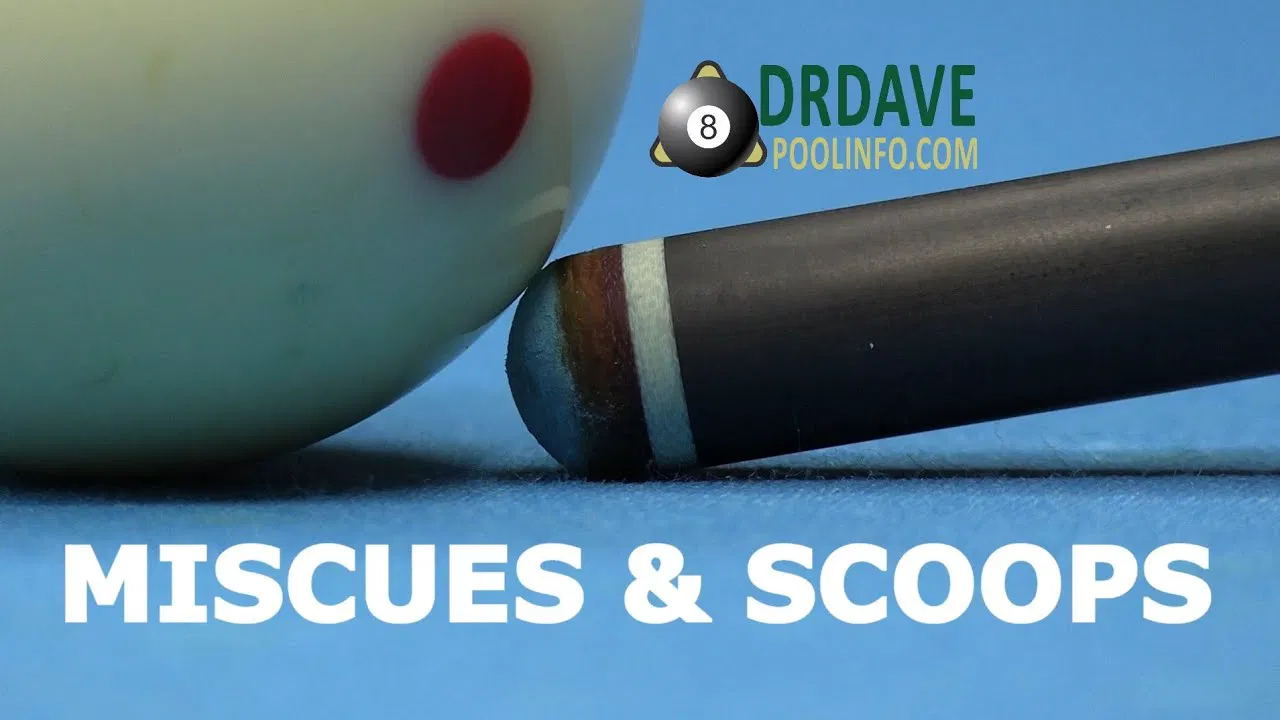
A jump shot is legal under WPA, APA, and CSI rules when the cue ball is driven downward and rebounds from the table, the player uses equipment permitted by that competition, and the shot satisfies the game's contact and rail requirements. Deliberately scooping underneath the cue ball is not a legal substitute.
Under the major pool rule systems used in the United States, players must understand three separate issues: how the cue ball becomes airborne, which cue is being used, and whether the resulting shot satisfies the rules of the game.
The distinction matters especially in American Poolplayers Association (APA) competition, where dedicated jump cues are restricted differently from regular playing cues.
Here's what players need to know before attempting a jump shot in league or tournament competition.
What Makes a Jump Shot Legal?
A legal jump shot is produced by striking the cue ball downward into the playing surface.
The player elevates the butt of the cue, delivers a downward stroke, and allows the cue ball to rebound from the table.
The cue ball becomes airborne because of the downward impact and subsequent rebound—not because the cue tip lifts it from underneath.
The World Pool-Billiards Association (WPA) describes this distinction in Section 2.9 of its Rules of Play.
A properly executed jump shot generally involves:
- Elevating the cue to create an appropriate downward angle.
- Striking the cue ball without deliberately scooping beneath it.
- Allowing the cue ball to rebound naturally from the table.
- Clearing the obstacle without an additional illegal cue contact.
- Contacting the correct object ball.
- Satisfying the remaining requirements of the game.
The jump itself is not automatically a foul. However, the rules of the particular discipline still apply.
What Is an Illegal Scoop Shot?
A scoop shot occurs when the cue tip contacts the playing surface and cue ball together in a way that lifts the ball off the cloth.
Instead of bouncing after a legitimate downward strike, the cue ball is effectively lifted or scooped upward.
This is fundamentally different from a properly executed jump.
Typical warning signs include an extremely low tip position, a stroke directed underneath the cue ball, or contact between the cue tip and the cloth during the lifting action.
However, a referee should evaluate the actual contact rather than assume every airborne cue ball resulted from a scoop.
Legal Jump vs. Illegal Scoop
| Feature | Legal Jump Shot | Illegal Scoop Shot |
|---|---|---|
| Stroke | Downward strike | Scooping or digging underneath |
| Cue-ball movement | Rebounds from table | Lifted by illegal tip contact |
| Cue-tip action | Normal striking contact | Tip contacts cloth and ball together |
| Intended technique | Controlled jump | Deliberate scoop |
| General treatment | Permitted in applicable disciplines | Prohibited when intentional |
| Main concern | Accuracy and legal contact | Rule violation and possible cloth damage |
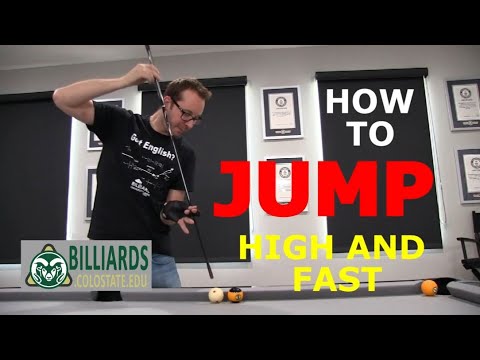
A legal jump drives the cue ball down into the table; a deliberate scoop lifts it from underneath. Image: Dr. Dave Billiards video thumbnail.
Under WPA rules, an intentional miscue may constitute unsportsmanlike conduct.
Under CSI rules, deliberately digging underneath or scooping the cue ball is a foul.
APA explicitly identifies intentionally scooping the cue ball over another ball as a ball-in-hand foul.
Is an Accidental Jump Caused by a Miscue a Foul?
Not necessarily.
A miscue occurs when the cue tip slips off the cue ball rather than making the intended contact.
This can happen because the player strikes too far from center, applies insufficient chalk, or loses control during the stroke.
Occasionally, a miscue causes the cue ball to jump unexpectedly.
Under WPA rules, an unintentional miscue that makes the cue ball leave the playing surface—including jumping partially or completely over another ball—is treated as a legal jump shot.
CSI similarly states that an unintentional scooping motion is considered a miscue and is not, by itself, a foul.
That does not mean every accidental jump is automatically legal.
A separate foul may still occur if the cue ball contacts the wrong object ball first, scratches, fails to satisfy the rail-contact requirement, or involves an illegal additional cue contact.
The distinction is between the accidental miscue itself and any separate violation during the shot.
Are Jump Cues Allowed Under WPA Rules?
Under the general WPA equipment provisions, players may switch between normal playing cues, break cues, and jump cues during a match.
Equipment must satisfy applicable specifications and be used for its intended purpose.
Consequently, a player may generally use a dedicated jump cue in disciplines where jump shots are permitted.
However, tournament regulations and discipline-specific rules can introduce additional restrictions.
For example, WPA Blackball has a specific prohibition against causing the cue ball to jump over another ball.
Players should therefore distinguish the general WPA jump-shot definition from the rules governing the actual game being played.
Before competing, check both the official rulebook and any additional tournament equipment requirements.
Can You Use a Jump Cue in APA League Matches?
This is one of the most important distinctions for American league players.
Under the APA equipment rules covering the 2026/27 league year, dedicated jump cues are permitted only in Masters Divisions.
The same restriction applies to using break cues or jump-break cues to perform jump shots.
However, regular shooting cues can be used for jump shots in standard APA league and tournament competition.
APA Cue Restrictions Explained
| Cue Type | Standard APA League | APA Masters |
|---|---|---|
| Regular playing cue | Jump permitted | Jump permitted |
| Dedicated jump cue | Not permitted | Permitted |
| Break cue used for jumping | Not permitted | Permitted |
| Jump-break cue used for jumping | Not permitted | Permitted |
| Regular cue broken down for jumping | Not permitted | Not permitted as a regular-cue workaround |
The prohibition on breaking down a regular shooting cue is particularly important.
A player cannot simply remove part of a normal cue to create a shorter jump cue.
In practical terms, standard APA players who want to jump must use a permitted regular shooting cue without breaking it down.
Players competing in Masters have additional equipment options.
How Do CSI, BCAPL, and USAPL Handle Jump Shots?
CueSports International (CSI) maintains rules used in BCA Pool League and USA Pool League competition.
CSI Rule 1-34 recognizes jump shots as legal.
It also establishes that deliberately scooping or digging underneath the cue ball to launch it is a foul.
An accidental scooping motion, however, is not automatically a foul.
The rules distinguish a deliberately illegal technique from an unintended miscue.
CSI also contains game-specific provisions and equipment requirements. Players should not assume that every cue permitted in one discipline is permitted in another.
For example, certain CSI disciplines restrict jump attempts to the player's regular playing cue.
Local league bylaws and tournament regulations can impose further conditions.
How Do the Major Rule Systems Compare?
| Rule Question | WPA | Standard APA | APA Masters | CSI |
|---|---|---|---|---|
| Proper jump shot | Generally legal where permitted by the discipline | Legal | Legal | Legal where permitted |
| Dedicated jump cue | Generally allowed under equipment standards | Not allowed | Allowed | Depends on game and equipment rules |
| Full-length playing cue | Generally allowed | Allowed | Allowed | Generally allowed |
| Intentional scoop | Prohibited; may involve unsportsmanlike conduct | Ball-in-hand foul | Ball-in-hand foul | Foul |
| Accidental miscue causing a jump | Not automatically a foul | Evaluate applicable foul rules | Evaluate applicable foul rules | Not automatically a foul |
| Additional event restrictions | Possible | Possible | Possible | Possible |
The key lesson is that a legal jumping technique does not automatically make the equipment legal.
A player can execute a mechanically correct jump and still violate the competition's equipment rules.
Can a Technically Perfect Jump Shot Still Be a Foul?
Absolutely.
Consider a 9-Ball situation.
The 3-ball is the lowest-numbered ball remaining. The cue ball is blocked by the 4-ball, and the player attempts a jump.
The cue ball successfully clears the obstruction but contacts the 5-ball first.
The jump technique itself may be legal, but the player has committed a wrong-ball-first foul.
Other violations can include scratching, making an illegal double hit, pushing the cue ball, or failing to contact a rail when required.
Players must also follow any applicable called-shot requirements.
A successful jump is therefore only one component of a legal shot.
What Are Three Common Jump-Shot Situations?
Situation 1: A Standard APA Player Uses a Regular Cue
A player is completely hooked behind an opponent's ball.
They elevate their full-length regular playing cue and execute a downward strike.
The cue ball clears the blocker, contacts the correct object ball, and satisfies the remaining shot requirements.
The jump can be legal under standard APA rules.
Situation 2: A Standard APA Player Uses a Short Jump Cue
Another player encounters a similar obstruction.
Instead of using their normal playing cue, they remove part of a jump-break cue and attempt the jump with the shortened section.
This equipment use is not permitted in standard APA league play.
The player cannot justify the action merely because the cue ball cleared the obstacle correctly.
Situation 3: An Accidental Miscue Produces a Jump
A player attempts a draw shot.
The cue tip slips, and the cue ball unexpectedly jumps over part of another ball.
Under WPA rules, an unintentional miscue causing the jump is not automatically a foul.
The referee must still determine whether another violation occurred.
How Should Beginners Practice Legal Jump Shots?
Jump-shot training should emphasize controlled contact rather than maximum height.
Players should practice only where jumping is permitted and should avoid damaging the table.
Stage 1: Develop the Downward Stroke
Begin without an obstruction.
Place the cue ball in an open section of the table.
Elevate the cue moderately and practice producing a low, controlled bounce.
Focus on keeping the stroke straight and avoiding contact with the cloth.
The objective is repeatability, not height.
Stage 2: Add a Training Obstacle
Introduce a suitable jump-training obstacle that will not damage the cloth.
Position it at a manageable distance from the cue ball.
Perform ten attempts and evaluate whether the cue ball clears the obstacle cleanly.
Avoid starting with an obstruction extremely close to the cue ball.
Stage 3: Add a Target Ball
Place a legal object ball beyond the obstacle.
For each attempt, award:
- One point for clearing the obstacle.
- One point for contacting the intended object ball.
- One point for keeping the cue ball on the table.
Ten attempts produce a maximum possible score of 30 points.
Repeat the drill under consistent conditions before increasing the difficulty.
This exercise is a suggested practice format, not an official WPA or APA training standard.
What Mistakes Should Players Avoid?
Several misconceptions create unnecessary fouls and disputes.
A cue ball becoming airborne does not automatically mean that a foul occurred.
Likewise, clearing an obstacle does not prove that a shot was legal.
Players should avoid using unapproved cues, breaking down regular shooting cues contrary to competition rules, and attempting jump shots on tables where the venue prohibits them.
Another common mistake is concentrating entirely on clearing the blocker.
Good jump-shot technique also requires controlling the landing point, contacting the intended object ball, and avoiding an unfavorable cue-ball position.
When a close call is likely, asking an official to observe the shot can reduce disputes.
Can you jump a cue ball with a regular pool cue?
Yes. A normal playing cue can produce a jump shot. Whether the shot is legal depends on the applicable game rules, equipment restrictions, and execution.
Are jump cues illegal in APA?
Dedicated jump cues are prohibited in standard APA league play but are permitted in Masters Divisions.
Is scooping the cue ball always a foul?
The ruling depends on intent and the applicable rule system. Deliberately scooping is prohibited, while an unintentional miscue is treated differently under WPA and CSI rules.
Does jumping over an opponent's ball automatically make the shot legal?
No. The cue ball must still contact the correct legal target and satisfy the remaining requirements of the game.
Can a pool hall prohibit jump shots?
Yes. A venue may impose restrictions to protect its tables even when the governing competition rules would otherwise allow jumping.
What Is the Final Takeaway?
Jump shots are legitimate technical skills in many pool disciplines, but players should understand the difference between a legal rebound and an illegal scoop.
Three questions should guide every attempted jump:
Was the cue ball launched through a legal stroke? Is the cue permitted in this competition? Does the shot satisfy the remaining rules?
For American league players, understanding the APA distinction between regular shooting cues and dedicated jump cues is particularly important.
Learning the technique is only half the task. Knowing when and how it can legally be used is equally essential.
Sources
Official rulebooks and technical references: