When to Play Safe in Pool: A Practical Decision Guide
The strongest shot is not always the one aimed at a pocket; sometimes it is the option that controls the next turn.
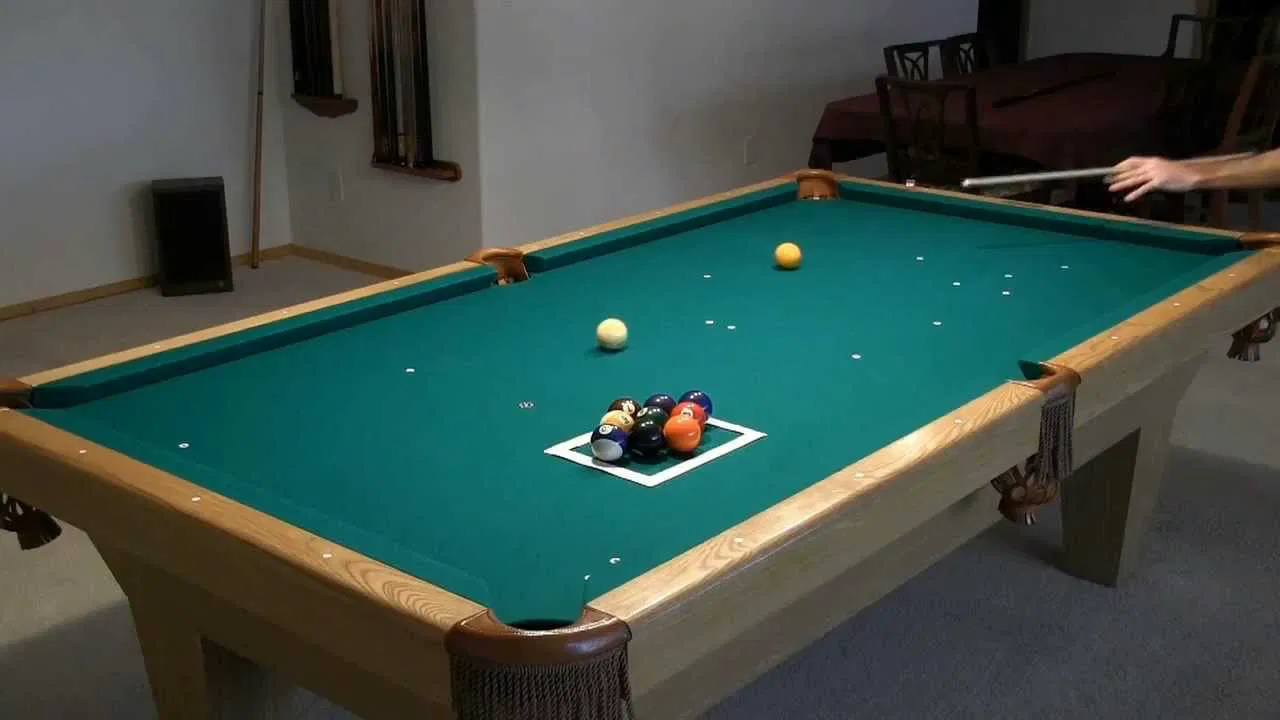
Play safe when the offensive shot has a low chance of success, a miss is likely to sell out the rack, and a defensive option offers a more controllable outcome. The decision is not simply whether a difficult ball can be pocketed; it is which option creates the best realistic chance of winning.
Sometimes the strongest move is to play a safety. Understanding when to attack and when to defend is one of the most valuable strategic skills in competitive pool.
When Is Playing Safety Better Than Taking a Difficult Shot?
A safety becomes attractive when three conditions occur together.
First, the offensive shot has a relatively low probability of success.
Second, missing would give the opponent a significant opportunity.
Third, a defensive alternative offers a more controllable outcome.
The third condition is essential.
A difficult offensive shot should not automatically be replaced with an equally difficult safety.
The objective is to choose the option that creates the best realistic chance of winning the rack.
A successful safety does not always have to hide the object ball completely.
It may simply force a longer shot, a difficult kick, an awkward cue-ball position, or a less favorable layout.
The value comes from reducing the opponent's opportunities while preserving your own.
What Is the Difference Between a Safety and a Defensive Shot?
Although players sometimes use the terms interchangeably, competition rules can distinguish them.
Under WPA call-shot provisions, a player can declare a safety instead of nominating a ball and pocket.
After that legal safety, the turn passes to the opponent, subject to the rules of the discipline.
APA uses a broader definition of defensive play.
A defensive shot is one performed without the intention of legally pocketing a ball.
This includes conventional safeties and certain other deliberate tactical actions.
For APA scorekeeping, the player's intention determines how the shot should be recorded.
Accurate defensive-shot tracking matters because the APA handicap system depends on proper scoring information.
Why Do League Players Attack Too Often?
Many developing players evaluate difficult positions by asking one question:
"Can I make this ball?"
That question is incomplete.
A better question is:
"What happens if I make it, and what happens if I miss?"
Consider a thin cut into a distant corner pocket.
You estimate that you would pocket it successfully on four of ten attempts.
That sounds reasonable until you examine the consequences.
If most misses leave your opponent an open layout, the shot may carry considerable risk.
Now compare a safety that you can execute effectively on seven of ten attempts.
Those numbers are hypothetical, but they illustrate the decision.
The correct choice depends not only on whether a ball can be pocketed, but also on the likely consequences of success and failure.
Players improve their strategic judgment when they begin thinking in terms of outcomes rather than isolated shots.
What Four Questions Should You Ask Before Shooting?
A practical shot-selection system can be built around four questions.
1. How Likely Am I to Pocket the Ball?
Estimate the probability based on your actual ability.
Avoid using the most impressive shot you've ever made as your reference.
Instead, consider how often you can execute the same shot under normal match pressure.
A long cut, difficult bank, elevated-cue shot, or position requiring substantial sidespin may carry more uncertainty than it initially appears.
Classify your options as high, moderate, or low confidence.
You do not need an exact percentage.
You need a realistic understanding of your own consistency.
2. What Happens If I Make the Shot?
Making a difficult ball does not automatically create a winning opportunity.
Consider where the cue ball will finish.
Will you have a clear shot on the next ball?
Will the cue ball become trapped behind another ball?
Will you need another difficult shot immediately afterward?
Will the shot leave a cluster unresolved?
A difficult shot that leads directly into a high-probability runout may be worth the risk.
A difficult shot that creates another difficult position is less attractive.
Strong players evaluate entire patterns rather than individual pockets.
3. What Happens If I Miss?
This may be the most important question of all.
A missed offensive shot can give away more than the current turn.
It may leave the object ball near a pocket, remove a valuable blocker, break up a cluster, or leave the cue ball in an ideal position for the opponent.
In 8-Ball, an unsuccessful attack can accidentally improve the layout for the opposing group.
In 9-Ball, a missed cut may give the opponent a clear view of the lowest-numbered ball.
When the punishment for missing is severe, a controlled safety becomes more valuable.
4. Can I Execute the Safety Reliably?
The final question prevents players from choosing defensive shots simply because they appear strategically sophisticated.
A safety must be practical.
Ideally, it should provide a reasonable margin for error.
For example, moving the cue ball along a line of obstructing balls is often easier to control than trying to stop it at one precise point behind a single blocker.
A slightly long or short shot can still produce a useful defensive result.
Dr. Dave's safety instruction emphasizes approaching along the line of blockers to increase the acceptable speed range.
This principle can make defensive play more reliable under pressure.
How Can You Compare Offensive and Defensive Options?
The following decision framework is a practical training guide, not an official rule or fixed statistical model.
| Situation | Preferred Consideration |
|---|---|
| High-percentage shot with clear position | Attack |
| Moderate shot with little penalty for missing | Attack may be reasonable |
| Moderate shot that leaves an open table if missed | Consider safety |
| Low-percentage shot with a reliable safety available | Favor safety |
| No practical offensive opportunity | Look for defensive options |
| Opponent has an easy potential runout | Avoid selling out |
| A controlled two-way shot is available | Consider the two-way shot |
| Safety carries a high foul risk | Reevaluate the offensive alternative |
This table should not be applied mechanically.
A safety that frequently gives away ball-in-hand can be worse than an offensive shot with a moderate success rate.
The comparison must account for the actual table layout and the abilities of both players.
Safety play becomes more reliable when players recognize repeatable patterns instead of improvising every defensive shot. Image: Dr. Dave Billiards video thumbnail.
What Makes a Safety Shot Effective?
Defensive play combines cue-ball control, object-ball placement, speed management, and anticipation.
Five principles are especially useful.
1. Control One Ball Before Trying to Control Both
A common mistake is attempting to send the cue ball and object ball to two exact locations.
That requires simultaneous control over multiple variables.
For many players, a more reliable approach is to prioritize one ball.
You might choose to hide the cue ball while allowing the object ball to travel naturally.
Alternatively, you might move the object ball into a difficult position while keeping cue-ball movement simple.
The objective is to create a reliable defensive result, not an unnecessarily complicated shot.
2. Increase the Distance Between the Balls
Distance can be a powerful defensive tool.
Even when the object ball remains visible, separating it from the cue ball can make pocketing more difficult.
Long-distance shots typically demand greater precision.
They can also make position control harder.
A strong distance safety may place the cue ball near one end of the table and the object ball near the other.
If the opponent must also navigate an obstacle, the difficulty increases further.
However, distance alone is not enough.
The object ball should not be left hanging near a pocket.
3. Avoid Creating an Easy Big-Ball Target
A defensive shot can appear strong while leaving an unexpectedly easy kick.
This often occurs when the object ball rests close to a cushion.
The opponent may be able to make legal contact either directly or by using the nearby cushion.
This creates the effect commonly called a big ball.
The rail effectively provides an additional route to contact the object ball.
When practical, moving the object ball farther away from the cushion can make the opponent's kick more demanding.
The goal is to reduce easy contact options rather than merely increase distance.
4. Use Blockers With a Wide Margin for Error
A blocker is an intervening ball that obstructs the opponent's direct path to the legal object ball.
A strong safety often uses existing balls instead of requiring dramatic movement.
The most reliable approach may be to send the cue ball into the line of several blockers.
This provides a larger zone in which the cue ball can stop successfully.
Positioning the cue ball relatively close behind a blocker can also reduce the space available for certain jump shots.
However, the shot should still prioritize legal contact and controlled speed.
A perfectly frozen cue ball is not always necessary.
A well-hidden cue ball with a reasonable margin for error can accomplish the strategic objective.
5. Plan for the Next Turn
A safety should not be judged only by whether the opponent is currently hooked.
Think about what happens afterward.
If the opponent makes a legal kick, where might the object ball finish?
Could the resulting contact accidentally open the table?
If your opponent fouls and you receive ball-in-hand, which problem balls will you need to address?
Could the defensive shot unintentionally remove an obstacle that was helping your position?
These considerations transform a basic safety into a longer-term strategic decision.
Should You Attack, Play Safe, or Use a Two-Way Shot?
Competitive players generally have three broad options in uncertain positions.
Attack: Attempt to pocket the intended ball while planning position for the next shot.
Safety: Prioritize leaving the opponent a difficult situation rather than attempting to pocket a ball.
Two-way shot: Make a genuine attempt to pocket the ball while arranging a more defensive outcome if the attempt fails.
A two-way shot offers an appealing compromise when the layout supports it.
For example, you might play a controlled cut shot that sends the cue ball behind an obstruction if the object ball misses the intended pocket.
However, the defensive outcome should be based on predictable ball movement.
It should not depend entirely on luck.
In APA competition, a genuine attempt to pocket a ball with a secondary defensive benefit is not recorded as a defensive shot.
The organization distinguishes this from a disguised safety intended to manipulate handicap records.
Players must therefore understand both the tactical distinction and the scorekeeping requirements.
What Are Three Realistic Safety Decisions?
Example 1: A Thin Cut in 9-Ball
Imagine the lowest-numbered ball resting near a long cushion.
The cue ball offers a very thin cut toward a corner pocket.
If the shot misses, the object ball could remain near the pocket while the cue ball finishes in open space.
That creates a favorable opportunity for the opponent.
Instead, consider a controlled thin hit that sends the object ball toward a distant cushion while moving the cue ball behind an obstruction.
Even if the opponent can make contact through a kick, the resulting shot may be considerably more difficult.
The defensive option may offer better overall value.
Example 2: An Unresolved Cluster in 8-Ball
You have a possible bank shot.
However, two of your remaining balls are tied together, and pocketing the bank would not create a clear runout.
Taking the bank immediately might remove one of your useful balls while leaving the cluster unsolved.
A safety could preserve that ball as a blocker and force the opponent to address the table.
If the opponent eventually fouls, you may receive a more favorable opportunity to resolve the cluster.
The important principle is to avoid pocketing available balls without a workable completion plan.
Example 3: A Two-Way Cut Shot
You face a moderately difficult cut into a corner pocket.
The natural cue-ball route allows a defensive result if the shot misses on the intended side.
You can attempt the pocket while controlling the cue ball toward a group of blockers.
If the ball drops, you continue shooting.
If it misses as anticipated, the opponent may inherit a more difficult position.
This is a useful two-way opportunity because the offensive and defensive outcomes share a controllable shot path.
How Can You Practice Better Safety Decisions?
Defensive ability improves when players practice with measurable objectives.
Billiard University and Dr. Dave both treat safety play as an important skill that deserves dedicated training rather than occasional experimentation.
The following 30-shot exercise provides a simple training structure.
It is an independently proposed drill, not an official Billiard University examination.
Drill Setup
Use a standard pool table.
Place one object ball near the center region of the table.
Position two additional balls to serve as blockers.
Change the cue-ball location between groups to create different angles and distances.
Use the table diamonds as references.
Avoid marking the cloth.
Group 1: Cue-Ball Control — 10 Shots
The objective is to contact the legal object ball and hide the cue ball behind a blocker.
Prioritize cue-ball placement.
The object ball does not need to finish in an exact location.
Make sure every attempt satisfies the applicable rail-contact requirements.
Group 2: Object-Ball Control — 10 Shots
Concentrate on moving the object ball into a difficult position.
Try to move it away from easy pockets and obvious contact routes.
Use controlled speed, stop shots, or stun techniques when appropriate.
Avoid excessive cue-ball movement.
Group 3: Distance Safety — 10 Shots
Create as much useful separation as possible between the cue ball and the target object ball.
Where practical, leave an obstruction between them.
A particularly strong result forces the opponent to attempt a kick rather than a direct shot.
How Should You Score the Drill?
Use a consistent scoring system for all 30 attempts.
| Result | Points |
|---|---|
| Legal safety leaves no direct view of the full target ball | 2 |
| Legal safety leaves only a partial or difficult direct shot | 1 |
| Easy direct shot remains, or a foul occurs | 0 |
The maximum possible score is 60 points.
Record your scores after every session.
The primary objective is not to reach a particular number immediately.
It is to improve the consistency of your defensive outcomes.
How Do You Learn From Poor Shot Selection?
One of the most effective ways to improve decision-making is to review previous matches.
After each session, identify three situations:
- An offensive shot that probably should have been a safety.
- A defensive attempt that had too little margin for error.
- A position where a two-way shot might have worked.
For each situation, record your estimated success rate, the likely consequences of missing, and the defensive alternatives.
If possible, recreate the position during practice.
Compare the outcomes of several attempts rather than relying on a single successful shot.
After reviewing approximately 20 matches, patterns may begin to emerge.
You may discover that you consistently overestimate difficult banks, struggle with certain safety angles, or leave too much distance between the cue ball and blockers.
Those observations provide specific areas for improvement.
What Are the Most Common Safety Mistakes?
One major error is assuming that defensive shots are easier than offensive shots.
A safety requires the same level of preparation and commitment as a difficult pot.
Other common problems include using too much speed, attempting precise control of both balls, leaving the object ball close to a pocket, and failing to consider the opponent's kicking ability.
Some players also defend too frequently.
If the remaining layout offers a straightforward runout, an unnecessary safety can surrender control of the table.
The objective is not to become a defensive player at the expense of attacking ability.
It is to choose the correct approach for the situation.
When should beginners start learning safety shots?
Once a player can consistently make basic shots and control cue-ball speed, safety practice can become part of regular training.
Is playing safety better than attempting a bank shot?
Not always. The correct decision depends on the probability of pocketing the bank, the consequences of missing, and the reliability of the available defensive options.
Does a good safety always require hiding the object ball?
No. Distance, difficult cue-ball position, unfavorable angles, and limited offensive routes can all create useful defensive pressure.
What is a two-way shot in pool?
A two-way shot is a genuine offensive attempt that also provides a planned defensive benefit if the ball is not pocketed.
How do you improve safety consistency?
Practice cue-ball control, speed management, blocker positioning, and object-ball placement. Measure outcomes and review unsuccessful decisions.
Are defensive shots recorded in APA league play?
Yes. APA requires appropriate defensive shots to be recorded accurately because they contribute to the integrity of the handicap system.
What Is the Final Takeaway?
Strong pool players do not judge a shot solely by whether it can be made.
They compare the reward of success, the consequences of failure, and the reliability of alternative options.
A difficult shot that leads to a likely runout may deserve an aggressive approach.
A similarly difficult shot that risks leaving an open table may call for a safety.
The difference lies in strategic judgment.
By practicing cue-ball control, increasing useful distance, understanding the big-ball effect, and approaching along blocker lines, players can develop more dependable defensive options.
The most valuable improvement is learning to recognize when those options are better than attacking.
Winning more racks is not simply about making more difficult shots. It is about making better decisions before every shot.
Sources
Official rules and instructional references: