Eight-Ball, Nine-Ball, Ten-Ball: How the Games Actually Differ
Same table, same balls, three different sports. What changes between the games — and why it matters for how you play.
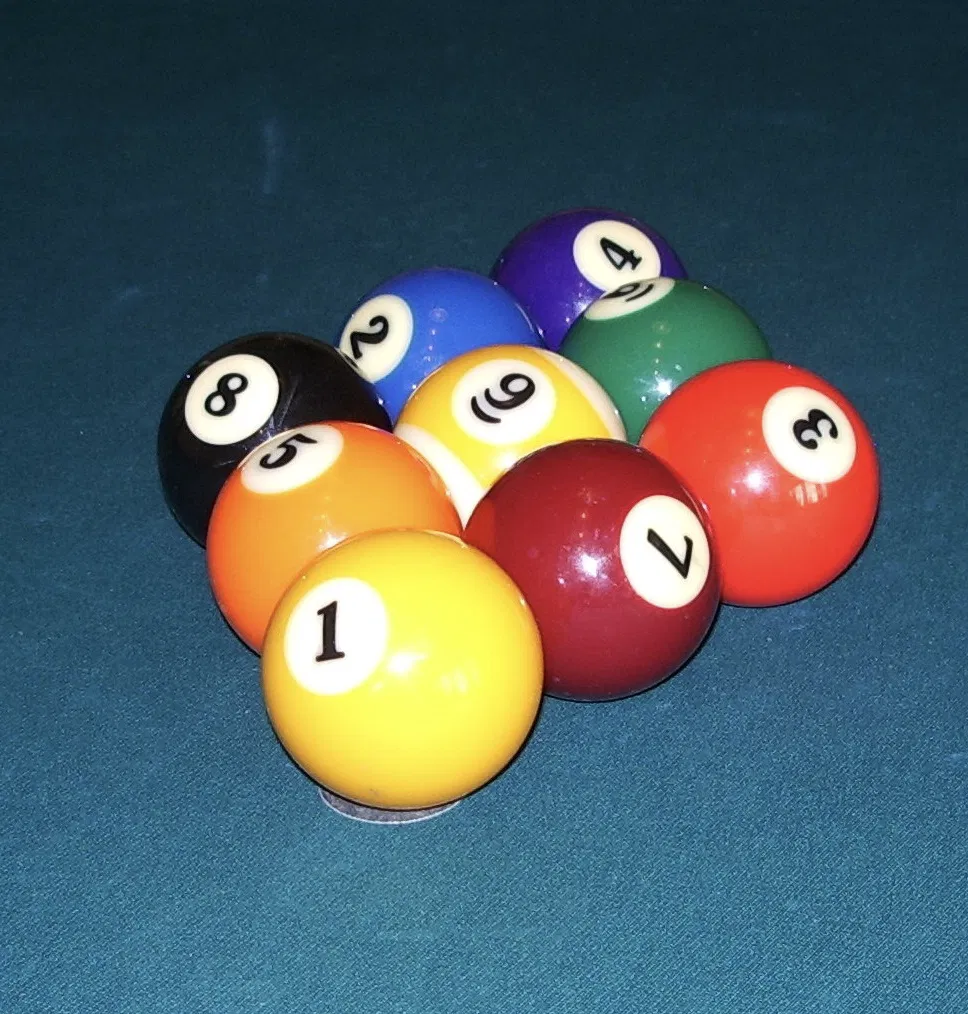
Walk into any pool hall and you will see the same nine-foot table and the same fifteen balls. What changes from game to game is not the equipment — it is what the game rewards.
Eight-ball: the chess match
Sixteen balls split into solids and stripes; clear your seven, then the 8. Because every ball is live in any order, eight-ball is the most strategic of the three — you are choosing routes, breaking up trouble early and playing safeties that would mean little elsewhere. It is the game most leagues are built on, and the one most players learn first.
Win the 8 on the break and the rack is yours instantly — the only one of the three where the break alone can end it.
Nine-ball: the sprint
Nine balls, shot in numerical order, lowest ball first. The 9 can fall on any shot — a legal combination that drops it early is as good as running the whole rack. That rule does two things: it speeds every decision up, and it keeps luck in the conversation.
Nine-ball is the professional tour's game because it fits television: short racks, constant tension, momentum that swings fast.
Ten-ball: the exam
Ten balls, called shots — no flukes, no early drops unless you call them. It is nine-ball's tougher sibling: more balls to clear, and you must declare ball and pocket on anything that is not obvious. Call it luck out of the game and ten-ball answers with the purest test of cue-ball control in the rotation family.
Which one should you learn?
Start with eight-ball for pattern reading and safety instincts. Add nine-ball for break power and combination awareness. Move to ten-ball when you want your position play graded honestly — it forgives nothing.
Sources: WPA rules documentation.