How to Join an APA League: Costs, Skill Levels & First Night
Joining an APA league costs $30 a year plus weekly team dues. Here is how to find a team, where new players start, and what your first night looks like.

Joining an APA league takes three steps: find your local league, pay the $30 annual membership, and get placed on a team. Every new player starts at skill level 3, so you do not need experience to join. The handicap system is built for beginners. This guide covers what it costs, how teams work, and what happens on your first league night.
Key points
- APA membership is $30 per calendar year, paid before your first match. Weekly team dues are set by your local League Operator and split among the players who play that night.
- All new players start at skill level 3. Your level is calculated from your scoresheets after your first match and reviewed as you play more matches.
- You can join alone. League Operators keep lists of players looking for teams and will match you with one.
- You do not need your own cue to start. House cues at the host location are fine for your first weeks.
Rules and fees were checked against APA sources in November 2026. Weekly fees vary by area, so confirm them with your local League Operator.
What is the APA, and who is it for?
The American Poolplayers Association (APA) is the world's largest amateur pool league, with nearly 250,000 members playing weekly 8-ball and 9-ball across the United States. Founded in 1979 by professional players Terry Bell and Larry Hubbart, it took its current name in 1981. Local leagues are run by League Operators who set schedules and calculate skill levels.
The APA is built for amateurs of every level. Its handicap system, The Equalizer, gives the weaker player fewer games or points to win, so a beginner can beat a stronger opponent. Most areas run team 8-ball and team 9-ball, and many also offer Ladies, Masters, doubles, and Double Jeopardy (both formats on the same night).
How do you find an APA league near you?
- Find your local league. Use the league finder on poolplayers.com for your ZIP code, or ask at a pool hall or bar that hosts league play. Host locations include pool halls, bars, and restaurants.
- Contact the League Operator. Say which format you want (8-ball, 9-ball, or both), which nights you are free, and whether you are joining with friends or alone. Operators keep lists of players looking for teams, so joining as a free agent is normal.
- Create your membership. Register and pay online, then download the APA Pool League app. Your captain can add you to the roster once your membership is active.
- Confirm your first night. Your captain will confirm the host location, start time, and how dues are paid. League nights run on the same night each week, usually starting in the early evening local time.
APA leagues typically run three sessions a year: Spring, Summer, and Fall. Joining at the start of a session is cleanest, but many teams can add a player mid-session if the roster has room.

How much does it cost to join an APA league?
There are two league costs: the national membership fee and the weekly team fee set locally. Table time is handled by the host location and varies, so ask your captain how it works at your venue.
| Cost | What it covers | Typical amount |
|---|---|---|
| APA annual membership | National membership for the calendar year, expiring December 31 | $30 per player per year |
| Weekly team fee | League dues for one team match, set locally | Commonly $50 per team per week; local bylaws range from about $35 to $60 |
| Your share | Team fee split among the five players who play | Roughly $7 to $12 per player |
| Table time | Practice and match tables at the host location | Varies by venue |
- Membership comes first. Pay it before your first match. Memberships run by calendar year, so one bought late in the year still expires on December 31.
- The team fee is owed every week. In most areas it is due for every scheduled match, including playoffs and forfeits. Double Jeopardy teams pay a higher combined fee. How your team splits the fee is up to the team.
- Payment is usually in the app. Ask your captain whether your team pays by app or cash.
The $30 membership is the current national fee in 2026 local bylaws and the APA franchise disclosure. The APA sets it in the Official Team Manual, so confirm the current amount with your League Operator.
What skill level do new APA players start at?
Every new APA player starts at skill level 3. The APA's Equalizer guide is direct about this: new players have no established level, so they all start as a 3, and a level is calculated and reported after the first match. A League Operator can start a player higher if that player is known to be highly skilled or already established in another format.
- 8-ball: skill levels 2 to 7. Your level sets how many games you must win, using the Games Must Win chart on the scoresheet. A skill level 3 playing a skill level 5 races to 2 games while the 5 races to 4.
- 9-ball: skill levels 1 to 9. Your level sets a points target. A skill level 3 needs 25 points; balls 1 through 8 are worth one point each and the 9-ball is worth two.
Your Local League Office calculates your level from your scoresheets. Wins, innings, and defensive shots all count. It takes about 10 matches before a level counts as fully established, so expect movement early on. Our APA skill levels vs FargoRate conversion chart shows how APA levels compare with FargoRate, and how FargoRate works explains the rating used by many open tournaments.
One team rule helps new players. The five players a team fields in a night cannot total more than 23 skill levels, and no more than two can be skill level 6 or higher. Teams need lower-level players for a legal lineup, so a new skill level 3 is a valuable roster spot.
What happens on your first league night?
A league night is a team match of five individual matches. Teams carry up to eight players, five play each night, and each player plays once. Captains take turns putting players up, so matchups are part strategy, part guesswork. Plan on about two to three hours.
- Arrive early and meet your team. Your captain confirms the lineup and how dues are paid.
- The lag decides the break. The two players lag for the break, and the winner is listed first on the scoresheet. Captains flip a coin to decide which team declares its first player.
- Score is kept on every shot. One player from each team keeps score, usually in the APA Scorekeeper app, with paper as backup. The scorekeeper marks innings, defensive shots, timeouts, and game winners.
- An inning ends when the player who lost the lag misses or fouls. A defensive shot is marked whenever a player shoots with no intent to pocket a ball. Marking them honestly matters because they feed into skill levels.
- Timeouts let your team coach you. Skill level 3 and below get two timeouts per game; skill level 4 and above get one. A timeout lasts about a minute, only the designated coach may come to the table, and the coach must leave before you shoot. Shot advice without a timeout is a coaching foul.
- Both captains confirm the result in the app or on paper, and dues are turned in.
Two rules surprise new players. APA 8-ball is not call-shot, but you must mark your pocket before shooting the 8-ball. Most fouls give your opponent ball in hand, with break fouls covered in our guide to APA 8-ball break fouls. If you are unsure about a shot, ask before you shoot. Knowing whether jump shots are legal under APA rules and how to avoid a frozen to a rail safety foul will save you arguments later.

What should you bring on your first night?
- A way to pay dues: the APA app on your phone, or cash if your team collects that way.
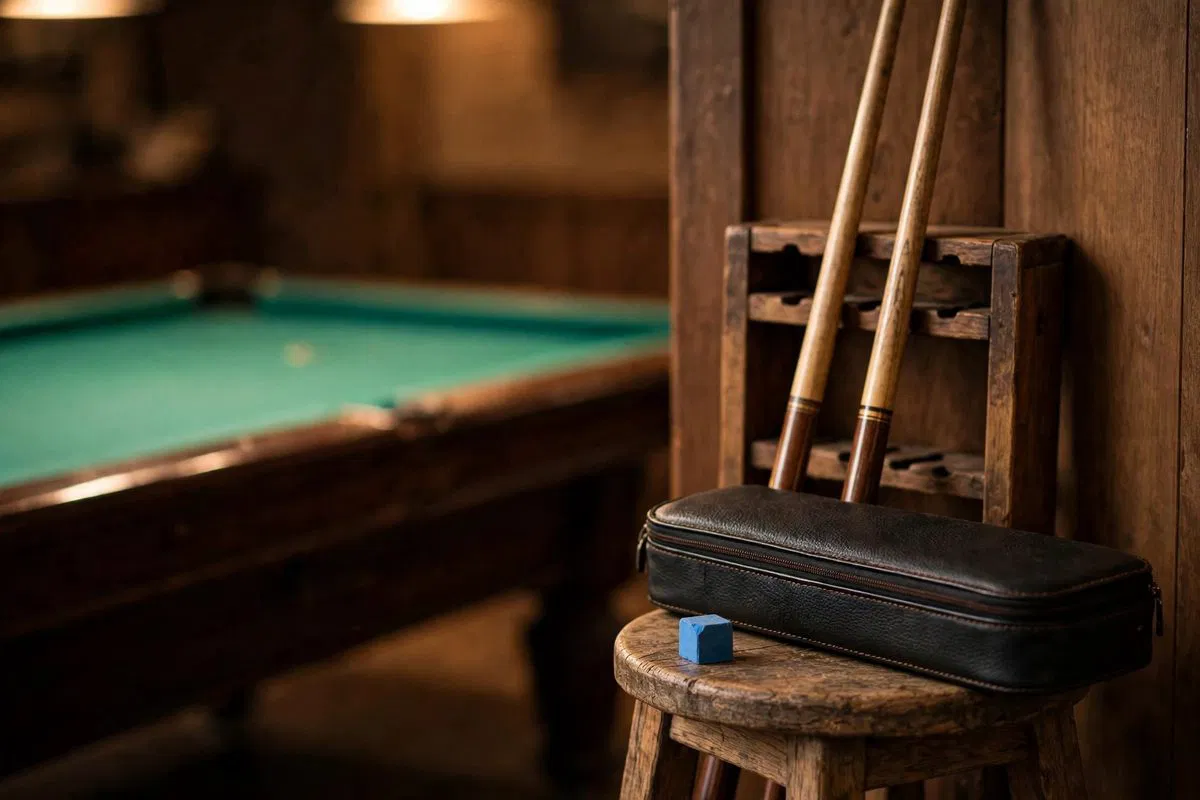
- A cue, only if you own one. Host locations have house cues. Play a few weeks, try teammates' cues, then decide what to buy.
- Chalk. Venues usually provide it, but your own cube means never waiting on one.
- Your phone. Schedules, standings, and stats live in the APA app, and many teams keep score on a phone or tablet.
Most APA leagues require players to be 18 or older, and host locations may have their own age and dress rules. Check both with your League Operator. Casual clothes are the norm.
What happens after your first night?
Your scores go to the Local League Office, your skill level is reported to your team, and your stats appear in the app. Over a session your team plays a weekly schedule, then playoffs, with winning teams advancing toward the APA World Pool Championships in Las Vegas. For your first session: show up, keep score honestly, and use your timeouts.
FAQ
Do I need my own cue to join an APA league?
No. Host locations provide house cues, and many new players use them for their first session. Buy your own when you know what weight and feel you like.
How good do I need to be to play APA league pool?
Good enough to make open shots and understand basic rules. Every new player starts at skill level 3, and the handicap gives you fewer games or points to win, so beginners win matches from their first night on.
Can I join an APA league without a team?
Yes. Contact your local League Operator and ask to be placed on a team. Operators keep lists of players looking for teams, and the 23 skill level team limit means teams regularly need new lower-level players.
How long does an APA league night last?
About two to three hours. A team match is five individual matches, and length depends on available tables and how close the matches are.
How often does my APA skill level change?
Your level is calculated after your first match and reviewed regularly as scoresheets come in. It takes about 10 matches before a level counts as fully established, so early movement is normal.
Sources: American Poolplayers Association, The Equalizer Handicap System; American Poolplayers Association, Membership Terms and Conditions; American Poolplayers Association, 8-Ball Scorekeeping flier; APA local bylaws for 2026 sessions (membership and weekly team fees, which vary by League Operator).