Pool Cue Weight Explained: 18oz vs 19oz vs 21oz — Which Fits Your Stroke?
The standard pool cue weight is 19 ounces. Compare 18oz, 19oz and 21oz cues, see what weight really changes, and pick the right one for your stroke today.
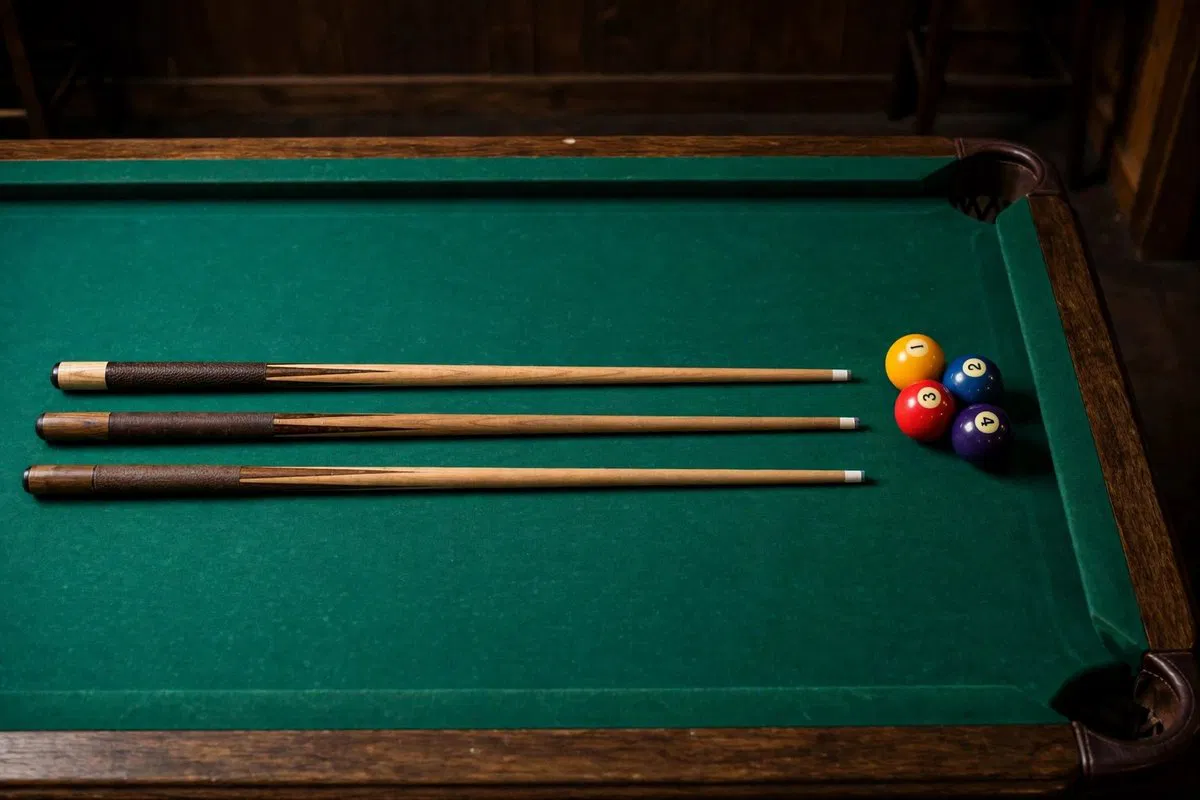
The standard pool cue weight is 19 ounces, and most adult playing cues are sold between 18 and 21 ounces. If you have no strong preference yet, start at 19 ounces: it is the weight most cues ship at, the weight most professionals cluster around, and the easiest weight to live with while your stroke is still developing. Go lighter only if 19 feels slow to swing, and heavier only if you have tried it and like the more planted hit.
Key points
- 19 ounces is the industry default; playing cues normally run 18–21 ounces, break cues 18–25 ounces, and jump cues around 12–14 ounces.
- Weight changes how the stroke feels and how easily you judge speed — it does not change your aim or alignment.
- Physics sets a low ceiling on power gains: at identical cue speed, a 22-ounce cue sends the cue ball only about 6.3% faster than a 17-ounce cue.
- Most modern cues let you change weight with a bolt under the bumper, so you can experiment without buying a new cue.
What are the standard pool cue weights?
Playing cues are usually sold in 18, 19, 20 and 21 ounces, often in half-ounce steps. Nineteen ounces (about 539 grams) is the most common weight and the average professional cue weight. For scale, a regulation pool ball weighs 5.5–6 ounces under WPA equipment specifications, so a 19-ounce cue carries more than three times the mass of the ball it strikes.
| Cue type | Typical weight | Why |
|---|---|---|
| Playing cue | 18–21 oz (19 oz most common) | Balance of control and speed |
| Break cue | 18–25 oz | Built for impact; players are found at both ends of the range |
| Jump cue | About 12–14 oz | A light cue gets the ball airborne more easily |
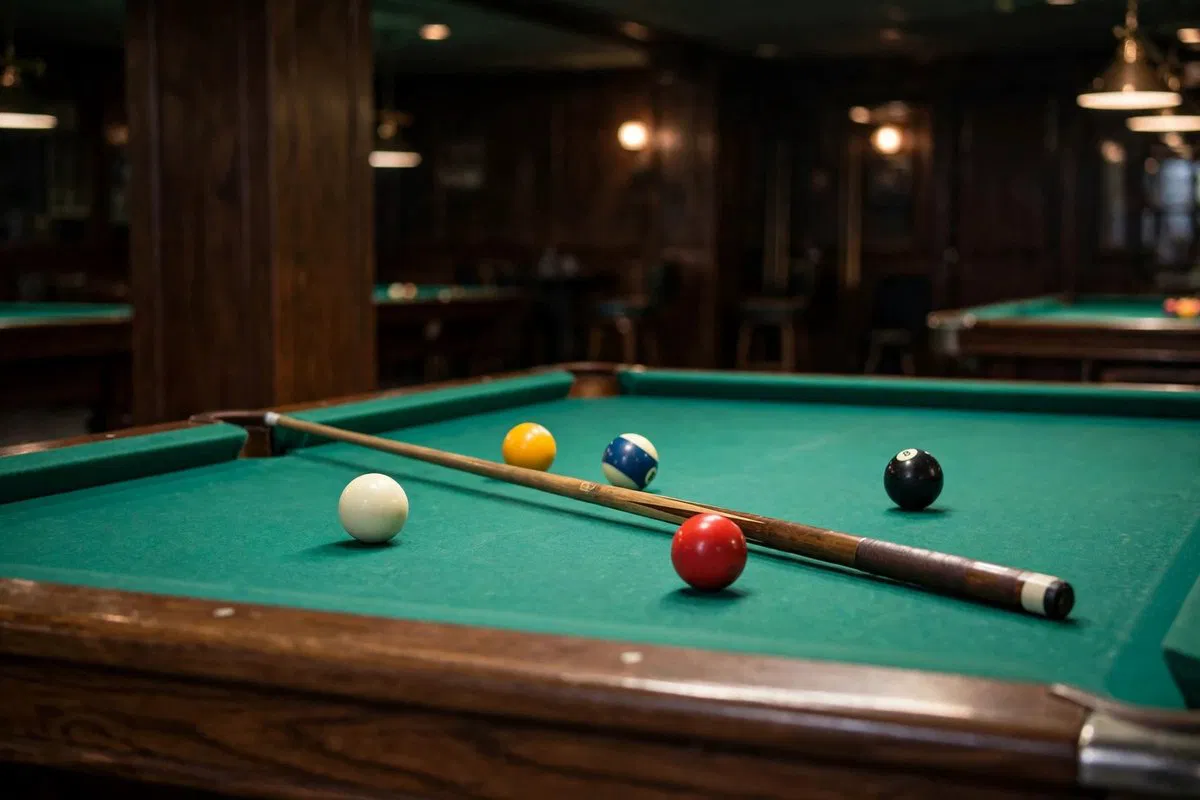
18oz vs 19oz vs 21oz: what actually changes?
Three things: how the stroke feels, how easy speed is to judge, and how much the cue forgives an unsteady arm. A heavier cue resists small wobbles and tracks straighter with less effort, which helps players whose stroke tends to quit just before the ball. A lighter cue is easier to accelerate, which suits a compact, rhythmic stroke and delicate soft shots.
| Weight | How it feels | Who it suits |
|---|---|---|
| 18 oz | Quick and light; needs a smooth delivery | Finesse players, smaller or younger players, snooker converts |
| 19 oz | Balanced; easy to control on soft shots | Most players — the safe default |
| 20 oz | Steady, with more behind the ball | Beginners and anyone unsure |
| 21 oz | Solid and stable, harder to feather | Players with a slow, deliberate stroke; common on break cues |
What weight does not change is your aim, your alignment, or where the cue ball goes on a center-ball hit. Dr. Dave Alciatore's physics analysis (technical proof TP A.30) puts a number on the power question: stroke a 22-ounce cue at exactly the same speed as a 17-ounce cue and the cue ball leaves only about 6.3% faster. In practice, most players stroke a heavier cue slightly slower, which cancels much of that gain — so the honest rule is to use the heaviest cue you can still accelerate while staying accurate.
Which weight should a beginner choose?
Start at 19 ounces. It sits in the middle of the range, it matches most house cues you will pick up in a pool hall, and it is where the large majority of professionals end up — most play between 19 and 19.5 ounces. Near your comfortable weight, an ounce either way makes little difference, so consistency with one cue beats spec-shopping.
If you are shopping and want to compare options across the range, our sister site's pool cue weight guide on Cues Review walks through the same trade-offs with buying advice. Players who like to experiment often look at adjustable-weight models — lines such as Uni, Novera and Wowcue are covered in the Uni cue section on Cues Review if you want to see what is available.
How do you change a cue's weight?
Most good cues have a weight bolt under the bumper at the butt end. A cue repair shop can swap the bolt to move the cue up or down by an ounce or so, which is far cheaper than buying a second cue. Balance point shifts with the bolt, so give any change a few sessions before judging it.
Weight is only one part of the hit. Shaft material changes deflection and feel as much as an ounce does — see maple vs carbon fiber shafts compared — and your grip hand matters too, as covered in open vs closed bridge. If you break with your playing cue, a 19–20 ounce cue breaks fine; dedicated break technique is covered in pool break technique. And before blaming the cue for miscues, check the tip and chalk basics in pool chalk, cue tips and miscues.
Frequently asked questions
What is the standard weight of a pool cue?
19 ounces (about 540 grams). Most adult playing cues fall between 18 and 21 ounces, and 19 is the most common weight sold and played.
Is a heavier pool cue better for breaking?
Not automatically. Break cues run from about 18 to 25 ounces and strong breakers are found at both ends. Extra mass helps only if you can still accelerate the cue accurately.
What weight pool cue should a beginner use?
19 ounces. It is the middle of the range, matches most house cues, and lets you build clean mechanics before deciding whether you prefer lighter or heavier.
Can I change my cue's weight after buying it?
Usually, yes. Most cues accept a different weight bolt under the bumper, which a repair shop can swap in minutes.
Do professionals use heavier cues than amateurs?
No. Most professionals play between 19 and 19.5 ounces — the same narrow band recommended to beginners.
Sources: Pool Cue Weight Guide; Light vs Heavy Pool Cue; How to Choose the Right Pool Cue Weight